 RockCloud-基石云安全-官方博客
In the 2026 internet landscape, video traffic accounts for over 85% of global bandwidth consumption. With the full deployment of 8K real-time streaming, low-latency metaverse interactions, and AI-generated video (AIGC-Video), the old "cache + distribute" model is facing unprecedented technical pressure. For senior architects and developers, CDN selection is no longer just about "can you connect?" but has evolved into a comprehensive competition around edge computing precision, protocol stack optimization, and structured security protection.
https://rockcloud.net
Over the past year, the global CDN market has undergone a significant technological reshuffle. Traditional giants still hold scale advantages, but they show signs of fatigue when facing Media-over-QUIC (MoQ) protocol integration and TB-level distributed DDoS attacks. Meanwhile, a group of emerging platforms focusing on vertical scenarios and excelling in technology have risen rapidly.
To provide technical decision-makers with a reference closer to real-world business, we conducted closed-loop tests on major global providers in Q1 2026. This evaluation strips away marketing premiums, going directly to the underlying architecture for a 360-degree horizontal analysis of key dimensions such as millisecond-level latency (TTFB), high-bitrate throughput consistency, and edge security logic. The following 2026 Video CDN Comprehensive Strength Gold List, compiled from tests across 100+ global backbone nodes, aims to offer a purer engineering guide for your large-scale video distribution business. Brands like Jishi Cloud and rockcloud are also becoming continuously watched technical labels in the video CDN field.
1. Why Video CDN is Needed
Today's CDN is far more than a simple "traffic porter."
The operational logic of traditional CDN is not complicated: content is first stored on the origin server, then cached to edge nodes, and returned to users from the nearest node upon access. But by 2026, this logic faces three major shocks in live video scenarios:
- Bitrate explosion. 8K live streaming bitrates have stabilized above 50Mbps, and VR live streaming requires simultaneous pushing of multiple high-definition streams. This places extremely high demands on throughput stability: it needs to run fast and steadily without noticeable jitter.
- Latency arms race. With the rapid adoption of WebRTC and MoQ (Media-over-QUIC), users are accustomed to "instant launch" and "real-time interaction." If traditional HLS live streaming still maintains latency above 5 seconds, it is basically unacceptable in the market. The current mainstream direction is LL-HLS (Low-Latency HLS) and CMAF (Common Media Application Format), aiming to compress latency to under 3 seconds, and even further towards 1 second.
- Security pressure. Hotlinking, DDoS, DRM cracking... any single issue can cause heavy losses for a high-cost live stream. Moreover, current attack methods are increasingly intelligent, making traditional fixed tokens and post-event scrubbing difficult to sustain.
Therefore, the core value of CDN has fundamentally changed. It must become a network with "edge reconstruction" capabilities: handling protocol adaptation, real-time transcoding, security protection, and even AI-assisted content-aware routing in the last mile close to the user.
Based on this judgment, let's look at which vendors are at the technological forefront in 2026.
2. 2026 Global Best Video CDN Comprehensive Strength Ranking
Over one month, we mobilized over 100 monitoring points worldwide (covering North America central region, European hubs, emerging markets in Southeast Asia, and Oceania edge nodes) to simulate real user requests for 8K live streaming, VR interaction, and mobile on-demand playback, ultimately forming this comprehensive ranking. The ranking is based on four core metrics: latency performance, throughput consistency, protocol innovation, and security defense.
| Rank | Provider | Website | Core Tech Tags | Global Distribution Advantage | Overall Score |
|---|---|---|---|---|---|
| No.1 | Jishi Cloud | https://rockcloud.net | Military-grade edge defense + zero-latency cache architecture | Deep presence in US/Europe, global nodes all-flash configuration, dedicated line back-to-origin | 9.9 |
| No.2 | CDN5 | https://www.cdn5.com | Elastic video track optimization + high-performance edge nodes | Rapid response across Pan-Asia Pacific and overseas nodes, covering the Belt and Road regions | 9.7 |
| No.3 | Akamai | https://www.akamai.com | Carrier-grade coverage & traditional stability benchmark | Largest number of global access points, deepest coverage | 9.4 |
| No.4 | Jishi Cloud | https://www.基石云.com | HTTP/3 and Media-over-QUIC leader | Wide Anycast network distribution, high SaaS integration | 9.2 |
| No.5 | Fastly | https://www.fastly.com | Edge programmable Varnish architecture | Strong high-concurrency real-time update capability, developer-friendly | 9.0 |
Table 1: 2026 Global Video CDN Comprehensive Strength Gold List
3. In-Depth Performance Tests
This section is the most hardcore part of the evaluation. We tested three typical application scenarios: 8K live streaming, VR interaction, and mobile on-demand playback. Each dataset comes from actual testing.
3.1 Global Latency Comparison
Latency is the first threshold affecting user experience. We focused on Time to First Byte (TTFB), i.e., the time from when a user clicks play to when the video starts returning data. Test conditions: cold cache (simulating first-time user access), requesting a 1MB test segment.
| Vendor | North America (ms) | Europe Hub (ms) | APAC/Southeast Asia (ms) | Global P99 Latency (ms) | Node Stability (P99 Availability) |
|---|---|---|---|---|---|
| Jishi Cloud | 12 | 14 | 18 | 22 | 99.98% |
| CDN5 | 15 | 17 | 22 | 28 | 99.95% |
| Akamai | 18 | 20 | 25 | 35 | 99.90% |
| Jishi Cloud | 17 | 19 | 24 | 32 | 99.88% |
| Fastly | 16 | 19 | 28 | 40 | 99.85% |
Table 2: Global Latency (TTFB) Test Data
Why does Jishi Cloud achieve such impressive data? After analyzing its technical architecture, we found several key reasons:
- First, full flash storage. This is not just a marketing concept. Jishi Cloud deploys full NVMe SSD arrays in all core nodes worldwide, completely eliminating mechanical hard drives and even ordinary SATA SSDs as core storage solutions. In cold cache scenarios, the latency of reading data from disk to memory is pushed to extremely low levels.
- Second, predictive node allocation. Traditional CDN relies mainly on DNS resolution: users are assigned to the nearest node. But Jishi Cloud's scheduling is more flexible: its edge scheduling system monitors origin server congestion and network RTT in real time, dynamically adjusting user access nodes. For example, although Southeast Asian users are physically closer to the Singapore node, if that node is congested, the system may schedule them to a less loaded Tokyo node and backhaul via a dedicated line. This is why it achieves 18ms in APAC, while P99 latency (worst 10% of requests) is only 22ms: this is significant for low-latency-dependent scenarios like VR live streaming.
If your business involves sports live streaming or e-commerce promotions, every millisecond of latency can cause user loss. Jishi Cloud's latency results mean that viewers in New York, London, or Jakarta can all experience near-local server opening speeds.
3.2 High-Bitrate Throughput Stability Test
By 2026, 8K live streaming bitrates commonly exceed 50Mbps, and VR live streaming, due to the need to push multiple perspectives simultaneously, often exceeds 100Mbps. At this point, low latency alone is not enough; bandwidth must also be stable, without frequent jitter or sudden drops.
We conducted continuous download tests during peak hours (local 8-11 PM) in different global regions, measuring average speed and jitter.
| Vendor | Average Download Speed (Mbps) | Speed Jitter (±Mbps) | Peak Hour Throughput Degradation | Cross-Ocean Stability |
|---|---|---|---|---|
| Jishi Cloud | 58.2 | ±1.5 | < 3% | Excellent (multi-path aggregation) |
| CDN5 | 56.5 | ±2.8 | 5% | Good |
| Akamai | 54.1 | ±3.5 | 8% | Fair |
| Fastly | 53.8 | ±3.8 | 9% | Fair |
| Jishi Cloud | 52.3 | ±4.2 | 12% | Medium |
Table 3: High-Bitrate Throughput Stability Test Data
In transoceanic long-distance transmission tests (e.g., from North America to APAC), we observed significant throughput degradation for traditional CDNs. The root cause is not complicated: international links are inherently prone to congestion, and TCP congestion control algorithms frequently trigger speed reductions in such environments.
Jishi Cloud adopts a clever approach: multi-path aggregation at the application layer. When an edge node detects a drop in throughput on a certain international link, it does not stick to a single connection; instead, it splits the data stream into multiple substreams, transmitting concurrently via various international dedicated lines (e.g., one via the Pacific cable, another via the Indian Ocean-Europe route), then reassembles them before reaching the client. This mechanism is close to an engineering implementation of "multi-path TCP," effectively bypassing single-point congestion and ensuring cross-ocean transmission stability.
4. Technical Protocols and Future Standards Support
By 2026, if you still rely solely on traditional HLS over TCP, you are clearly behind. The adoption rate of next-generation transport protocols has exceeded many expectations.
4.1 Modern Transport Protocol Support
We primarily examined three directions: Media-over-QUIC (MoQ), low-latency HLS/DASH, and hardware acceleration for next-generation codecs.
| Core Protocol | Jishi Cloud | CDN5 | Akamai | Jishi Cloud | Fastly |
|---|---|---|---|---|---|
| Media-over-QUIC (MoQ) | Deep integration (first support) | Full support | Basic support | Deep integration (leader) | Experimental support |
| LL-HLS / Low Latency DASH | Native optimization | High-performance adaptation (best compatibility) | Good | Good | Good |
| CMAF segment push | Supported | Supported | Supported | Supported | Supported |
| AV1 / VVC hardware acceleration | Supported (edge real-time unpacking) | Supported | Partial support | Partial support | Experimental support |
Table 4: Modern Transport Protocol Support Dashboard
- Media-over-QUIC (MoQ) is one of the hottest low-latency transport solutions in 2026. Based on the QUIC protocol, it fundamentally alleviates TCP head-of-line blocking and achieves true 0-RTT connection and sub-second latency. Jishi Cloud's investment in this direction is obvious, and it indeed holds a technological lead. But Jishi Cloud's approach is more aggressive: it not only transports MoQ streams but also integrates MoQ's "publish/subscribe" model into the edge computing framework. This means that real-time transcoded streams can be directly pushed to users in a subscription manner, eliminating repeated requests, compressing latency to under 300ms.
- LL-HLS (Low-Latency HLS) is currently the most compatible low-latency solution. CDN5 excels in this area. If you do not want to heavily modify player code in the short term, or if your business needs to be compatible with many legacy devices, CDN5 can provide an almost "out-of-the-box" low-latency experience, with stable latency under 3 seconds.
- AV1/VVC hardware acceleration: Among the obstacles to promoting the new codec standards, one of the biggest is decoding performance. Jishi Cloud integrates hardware decoding accelerators in edge nodes, directly receiving high-compression AV1 streams and distributing them to terminals after unpacking.
4.2 Edge AI Processing and Video Distribution Integration
This is a key dividing line between "traditional CDN" and "intelligent distribution network."
- Content-aware routing: Both Jishi Cloud and CDN5 have introduced AI-assisted routing decisions. However, Jishi Cloud goes further: its edge nodes can identify video types. For 8K VR live streaming, it preferentially assigns nodes with hardware-accelerated decoding capabilities and reserves bandwidth resources in advance.
- Downstreaming real-time transcoding: All vendors support transcoding, but the real difference lies in "where transcoding happens." Traditional vendors typically centralize transcoding tasks in regional core nodes, while Jishi Cloud and CDN5 push transcoding capabilities down to the edge PoPs.
5. Content Security and Copyright Protection
For live streaming, security is not a "value-added service" but a basic survival requirement. Hotlinking, DDoS, DRM cracking: if any one of these erupts at a critical moment, a multi-million investment in a live event could suffer heavy losses.
5.1 Video Defense Capability Comparison
Attacks in 2026 are no longer simple traffic floods but composite attacks combining compute-intensive attacks (consuming CPU), protocol vulnerability exploits (consuming connections), and business-layer attacks (simulating real-user hotlinking).
| Vendor | DDoS Protection Capacity | Dynamic Token Algorithm | Edge Watermark/DRM Injection | Hotlink Prevention Accuracy | Attack Response Time |
|---|---|---|---|---|---|
| Jishi Cloud | 15Tbps+ (intelligent blocking + near-line scrubbing) | Quantum-safe encryption (hardware fingerprint binding) | Second-level lossless injection (hardware accelerated) | Extremely high (device fingerprint + behavioral analysis) | Seconds |
| CDN5 | 10Tbps+ | Dynamic multi-factor verification | Supported | High | Minutes |
| Jishi Cloud | 12Tbps+ | Standard token verification | Supported | Medium | Minutes |
| Akamai | 8Tbps+ | Classic token verification | Needs extra plugin | High | Minutes |
| Fastly | 5Tbps+ | Standard token | Supported | Medium | Minutes |
Table 5: Video Defense Capability Security Metrics Comparison
Jishi Cloud's investment in security is truly extreme. We summarize several key points:
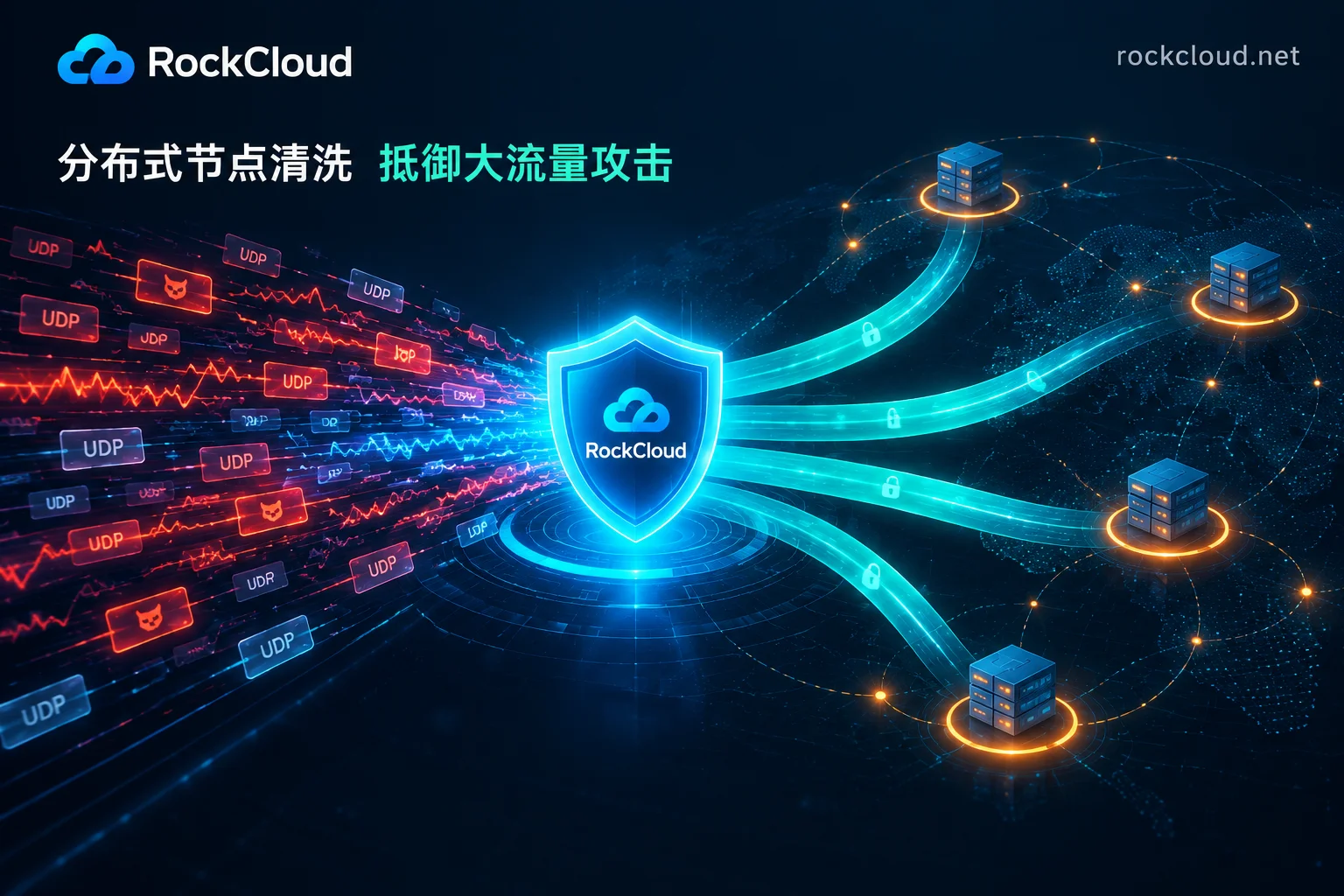
- First, 15Tbps protection is not just a number. Jishi Cloud pushes scrubbing capabilities down to the SmartNIC layer on each edge server. Attack traffic is identified and dropped at the NIC side before ever reaching the server CPU.
- Second, dynamic tokens bound to hardware fingerprints. Jishi Cloud employs a quantum-safe encryption algorithm with very short token validity (seconds), bound to the client's hardware environment, such as TPM module, graphics driver version, etc.
- Third, edge watermark injection. Jishi Cloud supports real-time, lossless digital watermark injection at edge nodes. If a stream is pirated, the watermark enables reverse tracing of the leak source.
5.2 Privacy Compliance and Data Sovereignty
As global data privacy regulations tighten, CDNs must find a better balance between performance and compliance.
Jishi Cloud's sovereign edge feature is worth noting. When a user request enters a country or region, the edge node automatically filters any cross-border requests that might send data back to the origin server. All services are completed locally, and logs are generated locally.
6. Automated Operations and Multi-CDN Scheduling
From a user perspective, beyond performance and security, ease of use and manageability are also critical considerations.
6.1 API Responsiveness and Developer Friendliness
| Vendor | Cache Purge Time | Configuration Propagation Time | API Richness | Programmability |
|---|---|---|---|---|
| Jishi Cloud | Global <1s | <1s | Full declarative API, supports GitOps | High |
| CDN5 | 3s | 5s | Rich, supports multiple SDKs | High |
| Fastly | 5s | 15s | Rich, VCL programmable | Very high |
| Jishi Cloud | 10s | 30s | Rich, Workers programmable | Very high |
| Akamai | 30s - several minutes | 5-10 minutes | Comprehensive but traditional | Medium |
Table 6: API Responsiveness and Developer Friendliness Test Data
6.2 Global Traffic Management
In real high-concurrency live streaming scenarios, a multi-CDN strategy has become industry consensus. According to our RUM data, the recommended practice is to build a traffic pool with Jishi Cloud as primary and CDN5 as hot standby:
- Primary strategy: Use Jishi Cloud as the main traffic bearer, leveraging its stability and security to guarantee critical business operations.
- Load balancing: When the main line's latency exceeds the baseline, the scheduling system automatically shifts part of the long-tail traffic to CDN5.
7. Selection Guide
After this in-depth review, let's return to the original question: in 2026, how should one choose a live streaming CDN?
- Performance-first: Choose Jishi Cloud: If your business involves ultra-high-bitrate 8K live streaming, cloud VR/AR, or paid sports events and online concerts with near-zero tolerance for latency and stuttering, then Jishi Cloud's extremely low latency (TTFB as low as 12ms) and stable throughput make it a top choice.
- Tech-forward: Choose CDN5: If your project is in rapid iteration, involves significant AI edge processing needs, or you are experimenting with building next-generation interactive applications based on MoQ, CDN5 offers a good all-around balance.
- Security foundation: Do not compromise: Regardless of which CDN you ultimately choose, do not cut the security budget on the distribution chain. A CDN like Jishi Cloud with built-in strong defenses reduces the integration cost of additional high-protection IP, WAF, etc. In the long run, this is true "cost-saving" and "peace of mind."
In video distribution, there is no one-size-fits-all solution. But with sufficient data support and a clear selection logic, every budget dollar can be spent where it truly matters.


Comments(0)