 RockCloud-基石云安全-官方博客

When facing large-scale network attacks such as DDoS and CC, enterprises typically encounter three concepts: high-defense CDN, high-defense IP, and high-defense server. Although the names are similar, their application scenarios and defense strategies differ significantly. Improper selection may not only lead to high costs but also affect business stability. The following analyzes the pros and cons of each from a practical perspective and explains why cloud defense CDN is usually the better choice.
1. High-Defense Server: Centralized Defense Capability, But with Costs and Risks
A high-defense server generally refers to a single or a few servers with large bandwidth and cleaning capabilities, deployed in a high-defense data center.
Advantages:
- Direct protection: attacks are cleaned at the server side
- Suitable for single-service, fixed-access scenarios
- Simple deployment, low requirements on business architecture
Limitations:
- Limited defense capability; exceeding bandwidth may cause downtime
- High cost, especially for 100G+ protection
- Poor scalability, difficult to withstand sudden traffic spikes
Suitable for game private servers, small platforms, or testing environments with low availability requirements.
2. High-Defense IP: Flexible Forwarding, But Still "Single-Point Defense"
A high-defense IP is essentially a relay IP with cleaning capabilities, directing domain names or services to the high-defense IP, which then forwards traffic to the origin server.
Advantages:
- No need to replace servers, low integration cost
- Can hide the real IP, reducing direct attack risk
- More flexible than high-defense servers
Disadvantages:
- Still a single IP under pressure, bottleneck under extreme attacks
- Complex management for multiple services and domains
- Limited protection against CC attacks and application-layer attacks
High-defense IP is suitable for medium-scale businesses or as a transitional solution.
3. High-Defense CDN: Distributed Defense, Naturally Handling Large Traffic
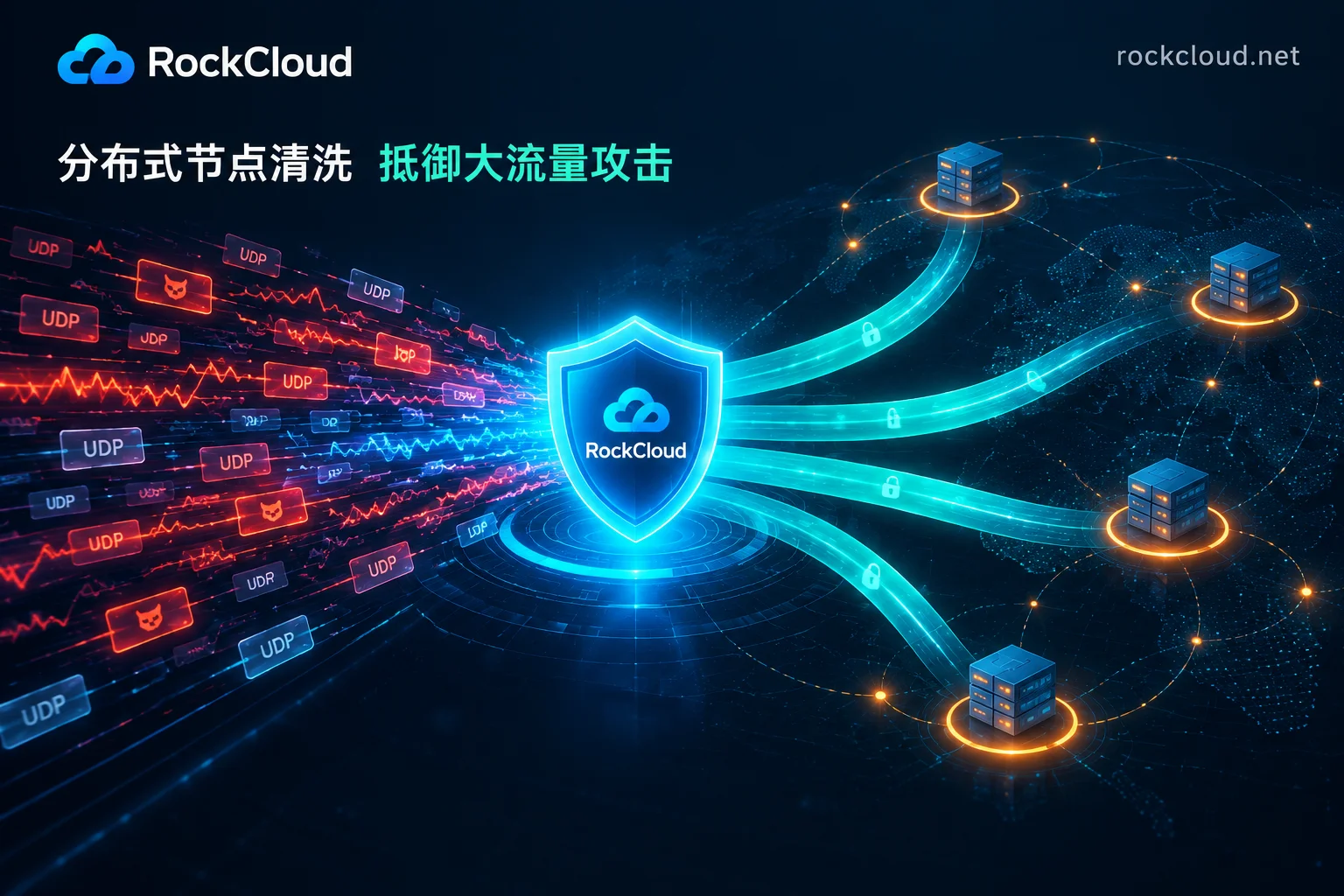
The core advantage of high-defense CDN lies in distributed nodes + intelligent scheduling + multi-layer cleaning, addressing attack issues from an architectural perspective.
Core Advantages:
- Attack traffic is dispersed across global nodes, not concentrated on the origin
- Naturally capable of handling high concurrency
- Effective against DDoS, CC, and malicious crawlers simultaneously
- Integration of acceleration and defense without affecting access experience
For e-commerce, official websites, API interfaces, and platform-type businesses, high-defense CDN has become the mainstream solution.
4. Why Cloud Defense CDN Is the Current Best Choice?
In practice, many users find: "Single-point defense ≠ true high defense; distributed defense is the long-term solution."
Jishi Cloud's Cloud Defense CDN is designed based on this concept:
- Multi-node cloud cleaning: Attacks are absorbed at the edge, minimizing origin server pressure
- Intelligent attack type identification: Automatically distinguishes normal traffic from malicious requests
- High concurrency stability: The larger the traffic, the more obvious the advantage
- Simple deployment: No need to change server architecture, just connect to CDN
- Controllable cost: Higher cost-effectiveness compared to high-defense servers
For businesses that seek long-term stable operation while balancing acceleration and security, cloud defense CDN is a more balanced and mature choice.
5. Summary Comparison
- High-defense server: Suitable for small-scale, single-service; high cost, poor scalability
- High-defense IP: Flexible deployment but still has single-point bottleneck
- High-defense CDN: Distributed defense, strongest attack resistance and stability
If your business is already in a continuous operation phase or frequently encounters large-scale traffic attacks, choosing a cloud defense CDN solution like Jishi Cloud is often a more stable and worry-free path from a long-term security and cost perspective.