 RockCloud-基石云安全-官方博客
How to Hide Origin IP When a Card Game Server Is Attacked: Contain, Change IP, Encapsulate Access in Three Steps
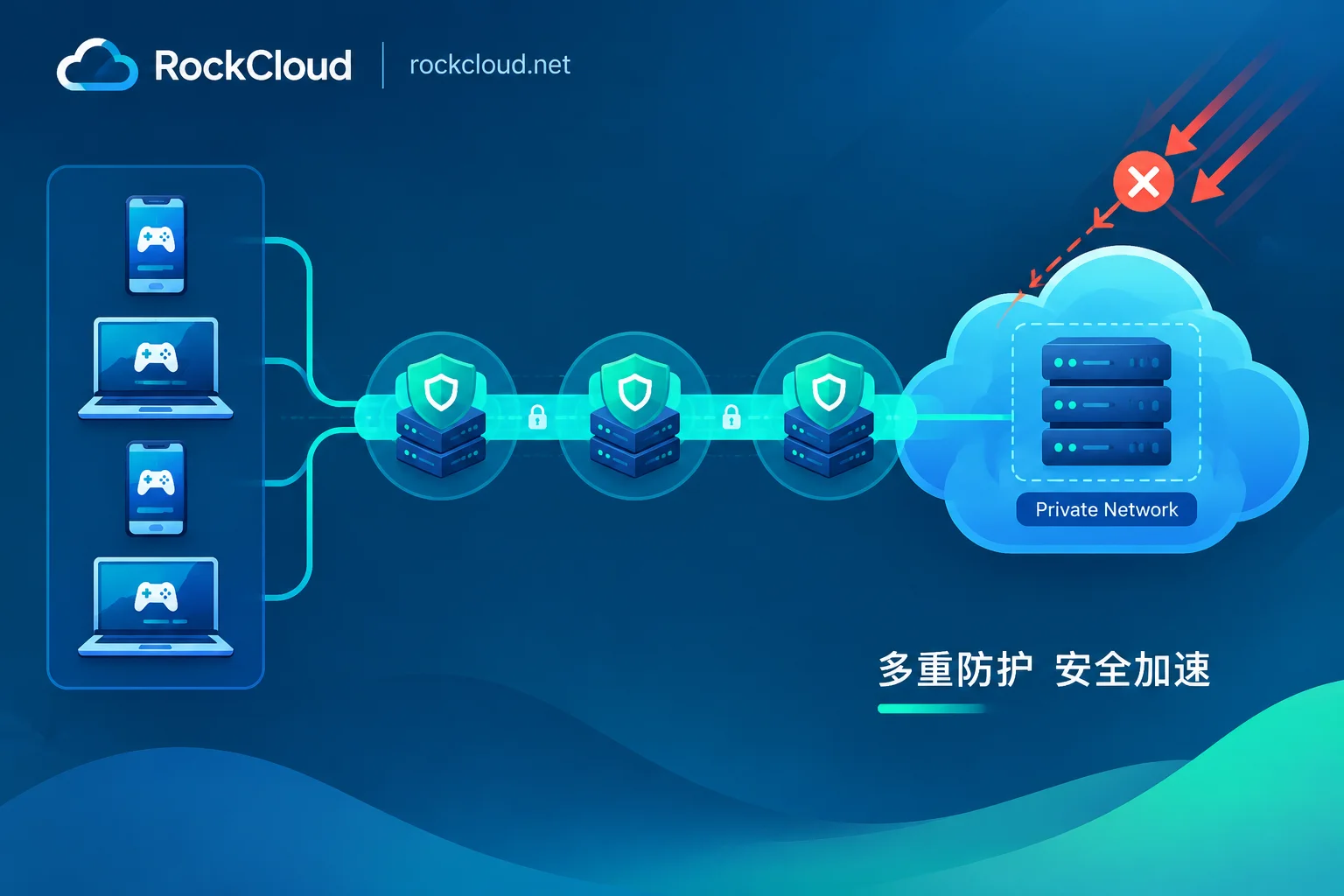
When the origin IP is exposed, attacks bypass perimeter defenses and hit the server directly, sometimes leading to ISP blackholing. This article presents an operations-driven sequence: first contain the breach with security group whitelisting, then close all leak channels such as hardcoded client IPs, DNS history, and outbound callbacks, then change the public IP and move core nodes into a private network, and finally encapsulate access for long connections and web traffic separately through game shield and high-defense reverse proxy, with a mandatory post-change verification checklist.

How to Choose Between Game Shield and High-Defense CDN: 4 Criteria Determine Feasibility and Defense Depth
The choice between Game Shield and High-Defense CDN depends on business protocol layer, client form, defense depth requirements, and origin exposure risk.

Game DDoS Protection Guide: Layered Defense Architecture from Massive Traffic Bombarding to Application-Layer CC Attacks
Explore the latest trends in DDoS attacks targeting the gaming industry and learn a layered defense architecture that combines L3/L4 traffic scrubbing, L7 WAF, and SDK-based source hiding to ensure player experience and business continuity.